Women Involved in the Arts and Sciences in Rome and Greece
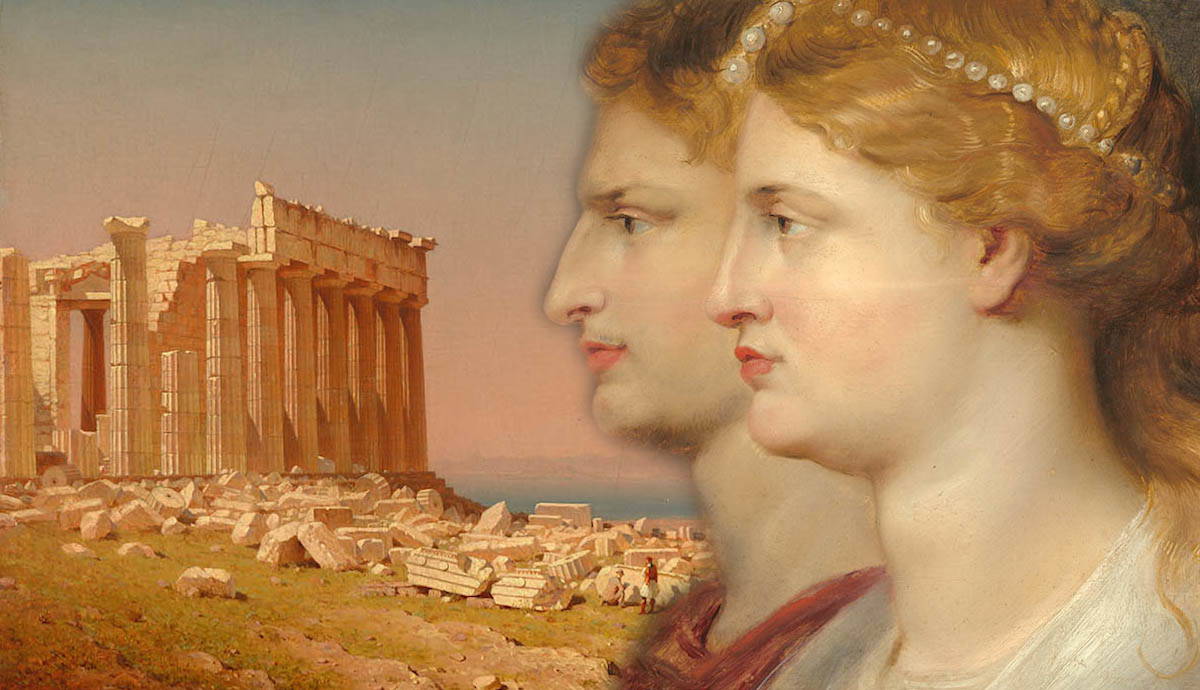
Equally in other Greek metropolis-states, Athenian society was made up of roughly iii classes: citizens, farmers and merchants, and slaves. Citizens had the most privileges and were seen as representatives of the city-state. This article will expect at the life of the costless Athenian women of Ancient Greece and offer a comprehensive picture of their lives. Did they take a improve life than other Greek women, according to our electric current standards? Was Athens indeed the virtually civilized city-state? These questions volition exist answered past describing and comparing what information is currently known well-nigh Athenian women.
How Can Nosotros Know Anything Near Athenian Women in Ancient Hellenic republic?

The majority of sources that scholars and researchers apply today to investigate the lives of women in Athens are either archaeological findings or written accounts. The latter can vary widely in genre because they may be literary works, political, or legal. In addition, women in Athens were a common topic in satires or tragedies, and this can give the impression of a rich account concerning them. However, all the existing surviving accounts are written from a man'southward perspective. Therefore, scholars inquire if nosotros tin can truly know anything almost the women of Athens in Ancient Greece.
A tragedy, for example, volition tend to exaggerate sure features for the sake of entertainment, and can be doubted at times as a good source. On the other mitt, legal texts, in the course of speeches, offering a glimpse of the Athenian view on gender and family, as many of these texts are concerned with inheritance. Archaeology, through its textile discoveries, may add to the text-based understanding every bit objects may be coupled with literature in hopes of getting a picture that is closer to historical reality.
Beingness Built-in A Girl in Athens, Ancient Greece

After the birth of a babe girl into a family unit of citizens in Athens, her parents prayed that the child would be healthy and survive. Survival of the infant was very important because 25% would die shortly after birth. Their wellness was equally important considering Athenians, only as Spartans, practiced infanticide. Namely, they would kill their children if they were unhealthy or unfit for the family'southward desires. Historians believe that girls were at a college risk of infanticide considering of their gender, as most families preferred to have at least one healthy boy who could inherit their lands and fortune. In terms of funeral commemoration, girls seem to have been commemorated in the same way every bit boys, based on the surviving gravestones.
Are you enjoying this article?
Sign up to our Complimentary Weekly Newsletter
Please check your inbox to activate your subscription
Give thanks you!
The many ceremonies surrounding the nativity of infants demonstrates just how important their survival was to Athenian gild. An infant would be named ten days afterwards birth, this beingness the beginning celebration, and it would be followed by the other 3 ceremonies at 5, seven, and twoscore days. Up to this point, these celebrations were organized in the same style for both genders but would become differentiated in favor of boys equally they grew.
Education of Women in Athens, Ancient Greece

Although Spartan women were literate and received an admirable education for the standards of Ancient Greece, this was not the instance for Athenian women. They did non receive whatsoever formal pedagogy because it was focused exclusively on boys. Boys were educated to play a role in the political and military life of the city-land of Athens. Due to this, the education of girls and women was seen as useless.
Instead of formal instruction, girls were taught basic and domestically-oriented skills by other females of the family. Girls would acquire how to run and care for a household, manage servants and slaves (this applied to wealthy households simply), how to weave and sew together clothes, and how to cook and heighten children. This breezy and domestic-centered didactics meant Athenian women'southward lives would most likely revolve around the household with piffling time left for other activities.
Spousal relationship Equally A Mark of Maturity

It is believed that girls reached the marrying historic period at fourteen years. Interestingly enough, the marrying age was seen as a marking of maturity and, if a girl died before reaching it, her parents would mourn her inability to reach maturity. Deceased girls would be even portrayed as brides, demonstrating just how tight the link between union and maturity was for Ancient Greeks.
The previous point highlights that marriage was a key consequence in the life of an Athenian woman. This is also supported by historical accounts that land precisely how the role of women was to marry and have children. Ensuring that the family continues on was the parents' main concern, specially fathers, as they would not want the family fortune to disappear. To secure their legacy, 14-year-old girls would be married to older men usually chosen by their fathers or another male relative. Thus, girls would not choose their husbands nor accept any influence over the affair.
The Legal Ability of Men

Legally, Athenian women could simply exist represented by men, either past their husbands or by another male relative. Thus, in near cases, women were required to be nether the guardianship of such a man. The guardianship implied that whenever a legal problem apropos in whatsoever way the said woman arises, the male guardian would represent her interest and take intendance of the process. While in theory this may audio useful, in practice, this put the women in a vulnerable position where they would exist legally dependent on their male person family members. Moreover, in that location wasn't whatsoever legal process in place that would protect women in any way from the legal abuse of the guardian. This meant that the law had no way to ensure her guardian accurately represented the woman'southward wishes.
To add together to this already problematic scenario for the electric current standards, in Ancient Greece, information technology was thought that one should never accost a woman, especially in political and legal matters. She would exist defined and mentioned only in her relationship with another man (i.due east., Socrates' daughter). Moreover, addressing women in such a situation would imply that the said women aren't respectable because a respectable woman should be every bit invisible every bit possible.
It Is Best For Her Non To Exist Seen
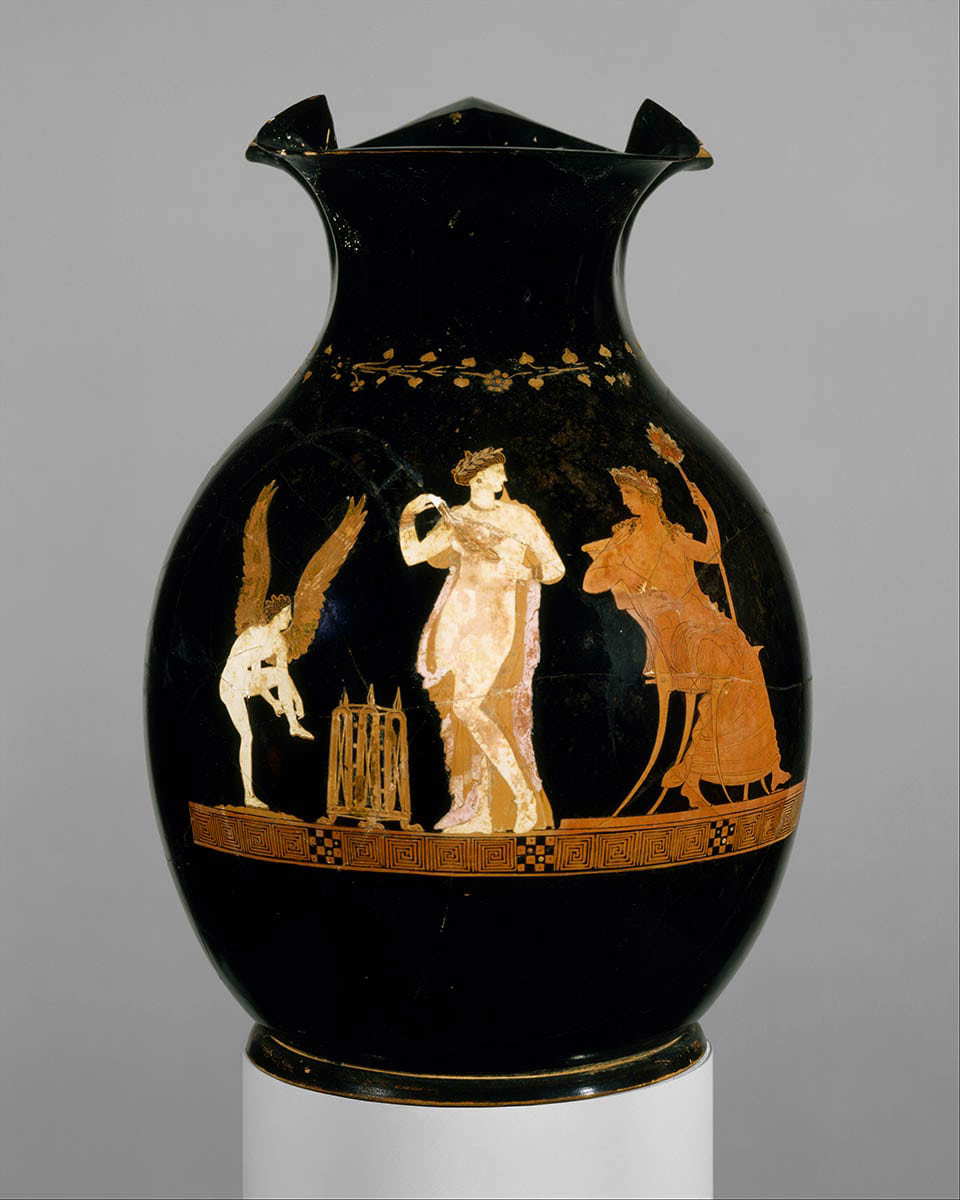
Athens, just like other city-states of Ancient Greece, strongly believed in the ideology of separation betwixt males and females: Athenian women dwelled indoors while their male counterparts involved themselves in public life. The boundaries of the household were Athenian women's specific place, while the outside of the house was reserved for men. In fact, an Athenian woman would retain her respectability simply if she would be accompanied exterior by a man, preferably a citizen and a member of her family, as slaves or servants won't fit the criteria.
Keeping to your assigned boundary equaled respectability and conformity. Of course, wealthy women could adhere to this standard and stay indoors to keep their good paradigm and appear every bit respectable citizens, but this wasn't possible for poor women as they had to get about town to fulfill necessary activities. Separating and creating gender-specific activities was such a crucial indicate of social life that even Aristotle inquired near the possibility of ensuring that poor women don't have to go exterior.
The Economic Influence of Athenian Women in Ancient Greece
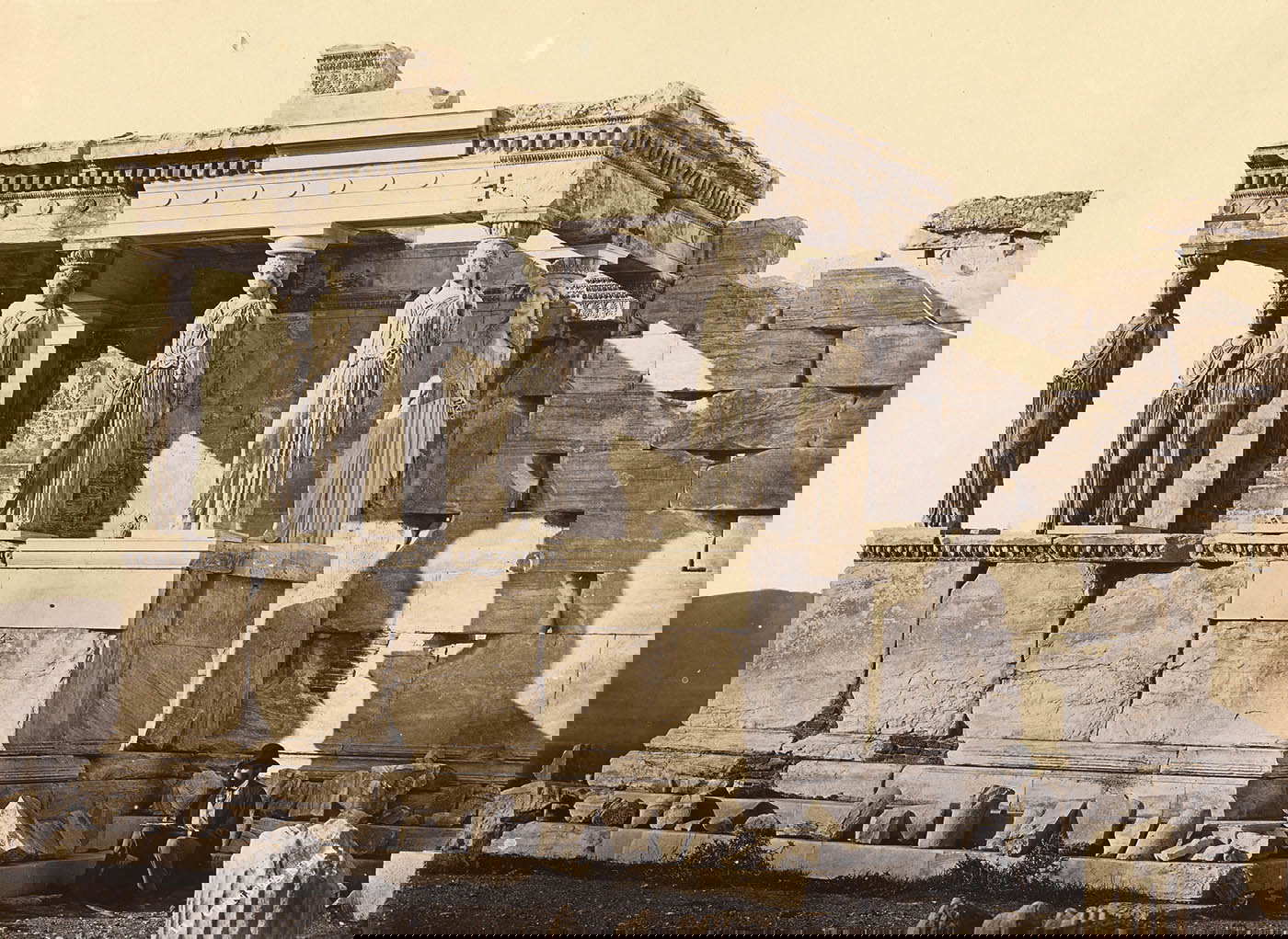
It was difficult for Athenian women to thrive in the economical sector because it was, first and foremost, ofttimes outside the boundaries of the household of which they were allowed. Some evidence fifty-fifty suggests a law that restricted how much income a adult female could brand from a contract. On the other manus, some historical examples show that Athenian women made larger incomes despite what was prescribed by the constabulary. This leads historians to question whether or non this police force was applicable for all women, or if there were exceptions to the criteria.
However, supposing that there wasn't a strict law regarding income, Athenian police force also forbade women from spending big sums of coin. This latter constabulary might be connected to the fact that, upon marriage, women were given quite big dowries that would ensure the woman's expenses throughout her marriage. Thus, the influence of Athenian women in Ancient Greece was often connected to the income they had. The greater the dowry in regards to their hubby's income, the greater their say in the household. Moreover, it wasn't uncommon for women to work and produce a larger income for themselves. At the same time, some fifty-fifty became merchants – Athenian law didn't let for the criticism of merchants regardless of their gender.
Priesthood: A Improve Selection For Athenian Women?

Thankfully, women were non completely restricted when it came to religious activities. They could join together with fellow men and participate without restraints. This was very important as religion fabricated up a good portion of public life. Moreover, information technology gave women another pick for their lives, allowing them to exit the boundaries of their households without fear of being seen every bit unrespectable.
A cardinal religious cult was that of Athena Polias, the protector of Athens. Women played a central role in this cult, in part due to the fact that the deity was a woman herself. Considering of the cult'due south prestige, the priestess of Athena was an incredibly important position in Ancient Athens. Besides symbolic importance, this position brought most political influence and was ane of the few means in which Athenian women could participate in the political life of the urban center.
Overall, the life of Athenian women in Ancient Greece seems to take been more restricted, and almost exclusively confined to their households. However, due to the lack of sources particularly written from a female person perspective, we cannot truly know what they thought of their life and how they perceived their circumstances.
Source: https://www.thecollector.com/athenian-women-in-ancient-greece/
0 Response to "Women Involved in the Arts and Sciences in Rome and Greece"
Post a Comment